
Water utility software for asset owners who need to verify, not just trust
Municipal water utilities and asset owners face the EU Urban Wastewater Directive, PFAS compliance, and aging infrastructure at a scale their workflows cannot absorb — and most depend on a single consultant to grade their own design work. AquaForge gives utility planning teams independent, AI-generated counter-expertise to validate proposed treatment designs, verify regulatory compliance across jurisdictions, and compare technology options on real engineering and economic criteria. One platform. Defensible decisions. No more captive consulting.
Built for utility planning and asset management teams across
Why software for utilities companies is no longer optional
For decades, utility planning ran on the same model: hire a consulting firm, accept the design they propose, approve the budget, build the asset. That model is breaking. The EU Urban Wastewater Directive 2024/3019 imposes quaternary treatment on every plant serving 150,000 inhabitants or more by 2045. PFAS standards are tightening across North America. Aging water utility infrastructure needs upgrading at a volume that did not exist when current procurement habits were formed.
When a utility lacks internal capacity to independently evaluate a consultant’s wastewater treatment plant design, it pays for whatever the consultant proposes — including the rework that arrives later when a missed regulation forces a redesign. Industry research links 6–11% of project budget overruns to regulatory and design mistakes that should have been caught upstream. On a multi-million-dollar upgrade, that is a line item the asset owner ultimately absorbs.
Water utility software changes the dynamic. Instead of grading the consultant’s homework against the consultant’s own assumptions, the asset owner runs an independent regulatory scan, validates the proposed treatment chain against alternatives, and challenges the design with quantified counter-evidence. The procurement conversation stops being a leap of faith. It becomes an evidence-based decision.
What asset owners and water utilities are up against
Most municipal water utilities and regional authorities have no senior process engineer on staff who can challenge a consultant’s treatment chain selection on technical grounds. The consultant proposes. The utility approves. If the design is wrong, the asset owner pays for the rework — and the consultant invoices for the additional engineering hours.
A typical wastewater treatment plant upgrade triggers federal, provincial or state, and municipal requirements — sometimes layered with EU-level directives or transboundary water agreements. Standards are written in different languages, updated on different schedules, and rarely cross-referenced. Verifying that a proposed design covers all of them manually is unreliable at scale.
Quaternary treatment under EU Directive 2024/3019 requires elimination of persistent organic and chemical micropollutants — ozonation, activated carbon, membrane filtration. PFAS standards demand new treatment technologies that very few utilities have operated before. Asset owners are being asked to approve designs for technologies their teams have never validated.
Most utility planning still happens in spreadsheets, with capital cost estimates carried forward from prior projects and operating cost assumptions that rarely include contaminant disposal — which can be 40–50% of CAPEX and 70%+ of OPEX on advanced treatment systems. Utility industry software that surfaces those economics changes the conversation with the council, the regulator, and the ratepayer.
Thousands of water and wastewater treatment facilities need upgrading over the next two decades. The senior engineering workforce to design and validate that work manually does not exist at the required scale, in any geography. Utilities that build digital validation capacity now will not be the ones competing for scarce engineering talent in 2030.
Industrial Wastewater Treatment: A Practical Guide to the Core Treatment Technologies
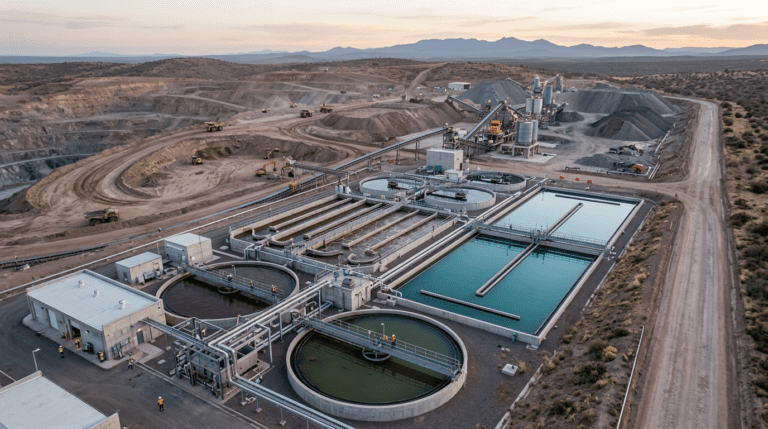
Guide • Treatment Technology Selection Industrial Wastewater Treatment: A Practical Guide to the Core Treatment Technologies A category-by-category reference to the physical, chemical, and biological processes most often used in industrial wastewater treatment, with the strengths, limitations, and typical applications…
Industrial Wastewater Treatment Plant Design: What Facility Operators Must Get Right Before Day One
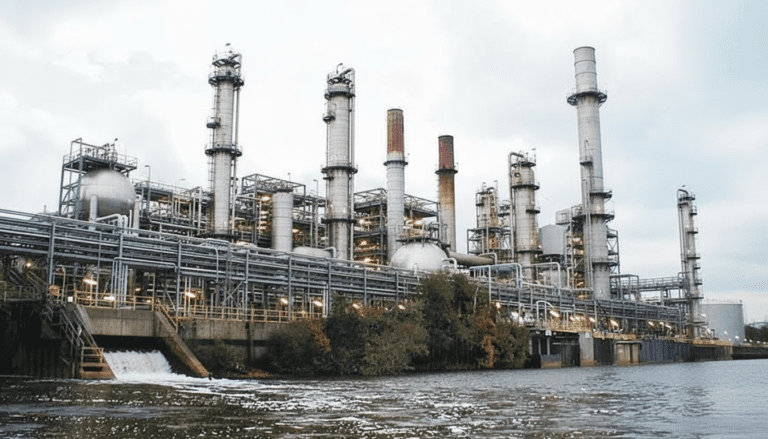
Guide • Industrial Compliance Industrial Wastewater Treatment Plant: A Design Guide From selecting the right treatment technology to meeting discharge permit requirements, here is what facility engineers, environmental managers, and plant operators across all industries need to know before a…
Guide: Sewage Treatment Plants & Water Infrastructure Planning
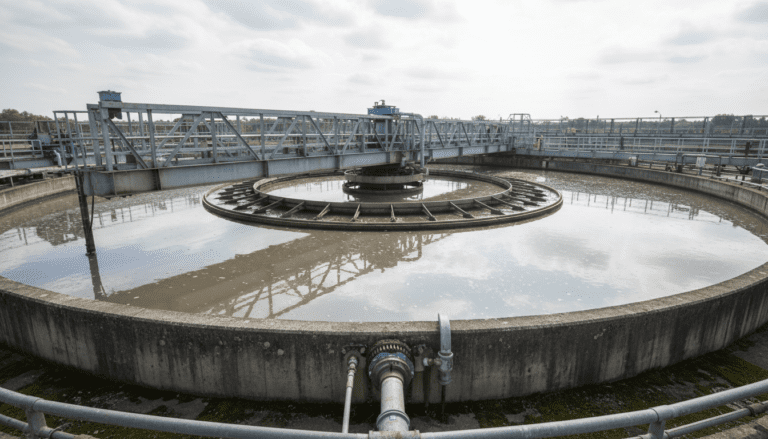
Article • Water Treatment Wastewater Treatment in Plant: How Sewage Treatment Plants Fit Into Water Infrastructures and Planning Understanding the definitions, performance standards, and regulatory frameworks that guide wastewater treatment from collection through discharge—and why “in plant” performance is only…
Three steps to independent validation, built for utilities that do not have a senior process engineer on staff
Other utility planning tools assume you already have the in-house expertise to interpret them. AquaForge is built around the opposite assumption: that the asset owner needs the platform to do the heavy engineering work, surface the right questions, and produce evidence the team can take into a council meeting or a consultant negotiation. No prior software experience required.
Define your jurisdictions and your asset
Enter the jurisdictions that apply to your wastewater treatment plant or drinking water facility — federal, state or provincial, municipal, EU. Define the plant’s service population, current treatment level, receiving environment, and any contaminants of concern (PFAS, micropollutants, nutrients). The platform handles the regulatory layering automatically.
Get an independent regulatory and design picture
AquaForge’s regulatory intelligence extracts every applicable standard from authoritative government sources, in 50+ languages, with traceable citations. The platform then maps the gap between your current treatment performance and what compliance actually requires. You see what a consultant should be designing toward — before they hand you a proposal.
Validate proposals, compare alternatives, defend the decision
When a consultant submits a wastewater treatment plant design, run it through AquaForge to verify regulatory coverage, surface alternative treatment chains, and compare CAPEX, OPEX, footprint, and contaminant disposal economics. Take the evidence into the procurement conversation. The decision is yours, with documentation a regulator, auditor, or council can follow.
How asset owners and water utilities use AquaForge
From small drinking water utilities to large regional wastewater authorities, across the situations where independent validation changes the outcome.
Independent validation of a consultant’s wastewater treatment plant design
Your engineering consultant has submitted a treatment plant upgrade proposal. The design looks reasonable. The cost looks high. You have no internal capacity to independently challenge the treatment chain selection, the equipment specification, or the regulatory assumptions baked into the proposal.
Run the consultant’s proposal through AquaForge. The platform verifies regulatory coverage across every applicable jurisdiction, generates alternative treatment chain configurations with full CAPEX and OPEX comparisons, and surfaces the questions the consultant has not yet answered. White-box AI shows the reasoning, so the asset owner can defend every counter-question.
Counter-expertise on demand. Stop depending on the consultant to grade their own work. Approve designs you understand. Push back on designs that do not hold up.
EU Urban Wastewater Directive compliance for urban treatment plants
EU Directive 2024/3019 imposes quaternary treatment on every wastewater treatment plant serving 150,000 inhabitants or more by 2045, with intermediate deadlines well before that. Most utilities have never designed quaternary treatment, do not have in-house expertise in ozonation or advanced oxidation, and depend entirely on consultants for technology selection.
AquaForge encodes EU Directive requirements directly into the regulatory engine, layered with national transposition and local discharge standards. The platform generates compliant quaternary treatment options — ozonation, activated carbon, membrane filtration — with the engineering logic visible at every step. The utility sees what compliance actually demands and what each technology choice costs over the asset lifecycle.
Approach the 2045 deadline with a plan grounded in evidence, not in whichever technology your incumbent consultant happens to favor.
PFAS treatment upgrade planning for drinking water and wastewater utilities
PFAS standards are tightening across jurisdictions, often with very short compliance windows. Drinking water utilities are being asked to install granular activated carbon, ion exchange, or membrane filtration systems for contaminants they have never measured, at concentrations they have never treated, under regulations that did not exist five years ago.
AquaForge tracks evolving PFAS treatment standards in real time across federal, state, and provincial jurisdictions. The platform matches treatment technologies (GAC, ion exchange, RO, advanced oxidation) against the specific PFAS compounds and concentration limits the utility must address, with traceable engineering justification for each option. CAPEX, OPEX, and contaminant disposal economics are surfaced upfront.
A defensible PFAS upgrade plan the council, the regulator, and the ratepayer can all follow. No more taking the consultant’s word for it on emerging contaminant technology.
Utility planning and capital planning grounded in real treatment economics
Capital plans for water and wastewater treatment facilities are typically built from spreadsheets, prior project costs, and assumptions that often ignore the largest line items on advanced treatment systems: contaminant disposal can be 40–50% of CAPEX and 70%+ of OPEX. Plans that miss those numbers are plans that go to council with the wrong total.
For each candidate treatment chain, AquaForge produces CAPEX, OPEX, footprint, and contaminant disposal estimates as integrated outputs, not as afterthoughts. Capital planning teams can compare upgrade scenarios on a like-for-like basis, stress-test assumptions, and bring a defensible long-range plan into budget conversations.
Capital plans grounded in engineering reality. Decisions a finance director can defend and a council can approve.
Scope your RFP before the consultants scope it for you
When a utility issues a wastewater treatment plant upgrade RFP without internal regulatory clarity, the responding firms write the scope to suit themselves. The asset owner ends up comparing proposals built on different assumptions, with no objective basis to evaluate them.
Use AquaForge to generate a complete regulatory profile and a baseline treatment chain analysis before the RFP goes out. Issue the RFP with verified requirements, structured constraints, and clear evaluation criteria. Compare responses against an objective benchmark the asset owner controls.
RFPs that produce comparable proposals, faster award decisions, and consultants who know the utility is bringing its own technical capacity to the table.
Regional and multi-jurisdiction water utility infrastructure
Regional water authorities and operators managing assets across multiple jurisdictions face compounded regulatory complexity. Standards differ by state or province, by watershed, by receiving environment, and by treatment classification. Maintaining a coherent compliance picture across a portfolio of assets manually is functionally impossible.
AquaForge maintains a structured, traceable regulatory profile for every asset in the portfolio, in every applicable jurisdiction. Upgrade priorities can be sequenced by regulatory risk, by capital exposure, or by deadline. Multi-asset capital plans become coherent at the portfolio level, not just at the individual plant level.
Portfolio-level visibility on regulatory exposure and upgrade economics, across every wastewater treatment plant and drinking water facility under your responsibility.
Why utilities choose AquaForge
Frequently asked questions
Common questions from asset owners, municipal water utilities, and operators evaluating water utility software for independent design validation.
Water utility software for independent validation is a platform an asset owner uses to verify a consultant’s proposed wastewater treatment plant or drinking water facility design — without hiring a second consultant. AquaForge runs an independent regulatory scan across every applicable jurisdiction, generates alternative treatment chain configurations, and compares them on regulatory compliance, CAPEX, OPEX, and footprint. The asset owner gets counter-expertise on demand, with traceable engineering logic that can be defended to councils, regulators, and ratepayers.
Use a software-based independent validation workflow. AquaForge runs the consultant’s design against the full regulatory profile for the project’s jurisdictions and produces alternative treatment chain options on the same engineering and economic criteria. The municipality sees, in evidence, whether the proposed design covers every applicable requirement, whether the technology selection is competitive against alternatives, and whether the lifecycle cost picture is realistic. That evidence becomes the basis for an informed approval, a counter-proposal, or a substantive negotiation — without retaining a second engineering firm.
Generative design can automate large portions of conceptual and preliminary treatment plant design by rapidly evaluating thousands of design permutations based on engineering constraints, treatment objectives, site conditions, and regulatory requirements. This can reduce preliminary design timelines from weeks or months to hours or days while still allowing engineers to review and refine the final design.
Yes. AquaForge’s regulatory intelligence covers EU Directive 2024/3019 on urban wastewater treatment, including the staged quaternary treatment requirements that apply to wastewater treatment plants serving 150,000 inhabitants or more by 2045. The platform layers EU-level requirements with national transposition and local discharge standards, and produces compliant treatment chain options — ozonation, advanced oxidation, activated carbon, membrane filtration — with full engineering traceability. Asset owners and operators can plan upgrade sequencing against the binding deadlines, not against guesses about what the directive will require.
PFAS standards differ by jurisdiction, evolve quickly, and apply to different PFAS compounds at different concentration limits. AquaForge tracks federal, state, and provincial PFAS regulations and matches them against treatment technologies — granular activated carbon, ion exchange, reverse osmosis, and advanced oxidation — based on real performance data for the specific compounds the utility must address. The platform also surfaces contaminant disposal economics, which on PFAS systems can be the dominant lifecycle cost. Utilities get a defensible upgrade plan that holds up against current regulations and adapts as standards tighten.
No. AquaForge is purpose-built for the regulatory intelligence, design validation, and treatment chain analysis decisions that traditional utility planning and asset management systems do not handle. It sits alongside your existing software — SCADA, GIS, CMMS, asset management platforms — and focuses on the upstream engineering decisions where independent capacity changes the outcome. There is no operational disruption to adopt it, and no integration project required to start using it for a single upgrade evaluation.
Smaller utilities are exactly who the platform is designed for. The premise of AquaForge is that the asset owner should not need a senior process engineer on staff to challenge a consultant’s design or to understand what a regulation actually requires. The platform encodes that expertise. Capital planning officers, infrastructure directors, and operations managers can use AquaForge to make informed decisions on wastewater treatment plant upgrades, PFAS compliance, and EU Directive readiness without first hiring engineering depth that does not exist in the local labor market.
Regulatory Intelligence Quick Check starts at $2,000 per user per year. Full Regulatory Intelligence with complete extraction and gap analysis is $7,000 per user per year. Both tiers are deliberately positioned below typical municipal procurement thresholds, so a head of utility planning or director of infrastructure can authorize a trial without convening a procurement committee. The ROI is straightforward: a single avoided rework cycle on a wastewater treatment plant upgrade pays for years of platform access. The Design Generator and Deployment modules are priced separately as they become commercially available.
Generative design can automate large portions of conceptual and preliminary treatment plant design by rapidly evaluating thousands of design permutations based on engineering constraints, treatment objectives, site conditions, and regulatory requirements. This can reduce preliminary design timelines from weeks or months to hours or days while still allowing engineers to review and refine the final design.
Ready to validate your next upgrade without depending on the consultant to grade their own work?
Schedule an ROI conversation. We will walk through your asset portfolio, the regulatory profile that applies to your jurisdictions, and the upgrade decisions on your near-term horizon — and show you how independent validation works on a real proposal you have on the desk today.
Sources & references
- $3M–$5.5M potential rework exposure per standard treatment project. Construction Industry Institute (CII), A Guide to Construction Rework Reduction — rework-cost range derived from the 12.4% quality-deviation figure applied to a standard treatment project budget. construction-institute.org
- 6–12 months for detailed design before construction begins. Ontario First Nations Technical Services Corporation (OFNTSC), Stages in Completing a Project — Project Delivery Guide. ofntsc.org
- 45–60% of late-stage design risk tied to standards and design review gaps. CoLab Engineering Research, 45% of Design Standards and Guidelines Are Not Documented — undocumented standards and preventable late-stage errors. colabsoftware.com
- 2045 quaternary treatment deadline for affected urban wastewater treatment plants. Directive (EU) 2024/3019 of the European Parliament and of the Council concerning urban wastewater treatment, Official Journal of the European Union — quaternary treatment required for plants serving 150,000 p.e. or more by 31 December 2045. eur-lex.europa.eu
Figures cited above are drawn from independent industry research and the binding text of EU Directive 2024/3019, and are presented to contextualize the project environment asset owners and municipal water utilities operate in. Project-specific outcomes vary by scope, jurisdiction, and asset.